Agentic Privacy Compliance Platform
Agentic Privacy Compliance Platform
Move beyond manual and automate privacy compliance with AI agents
Automate privacy assessments, data maps, and risk discovery with complete data visibility and AI agent automation

AI AGENT
AUTOMATION
AUTOMATION
CODE
Websites
mobile Apps
3rd party apps
documentation
Agentic Assessments
Dynamic Data Maps
Web Auditor
App Auditor

AGENTIC AI PRIVACY COMPLIANCE PLATFORM TRUSTED BY PRIVACY LEADERS AT
Technology
Govern personal data across your tech stack

Automate compliance & unblock innovation
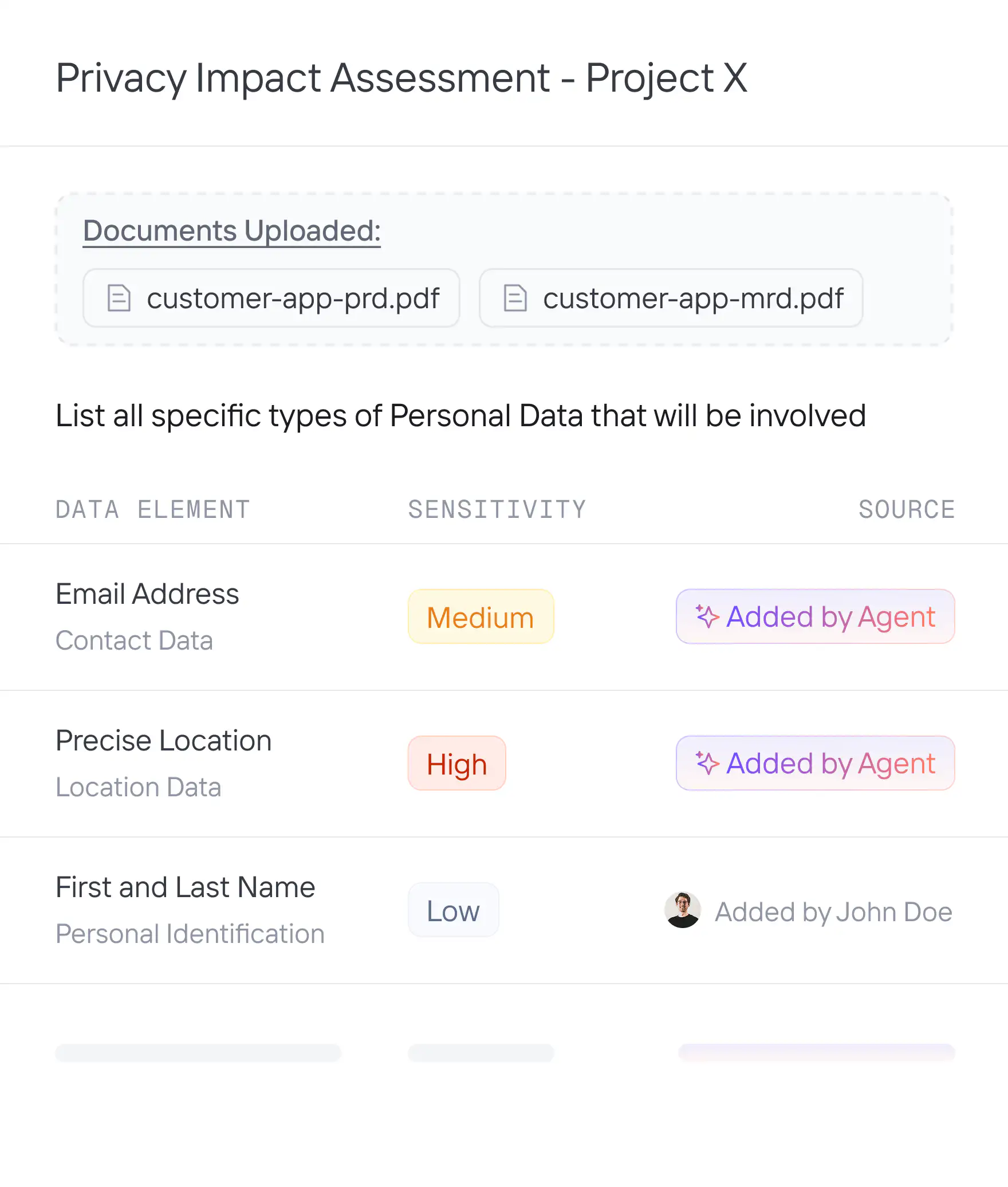
Agentic Assessments
Populate 100% of PIAs, DPIAs, RoPAs, vendor assessments, etc. with agents that analyze any related documentation.
Validate with agent reasoning and evidence
Leverage pre-built and custom templates
Auto-detect risks based on your policies
Sync outputs to centralized data map

Dynamic Data Maps
Build the most complete and real-time data maps with solutions to capture data from all sources
Code scanning for all internally developed software
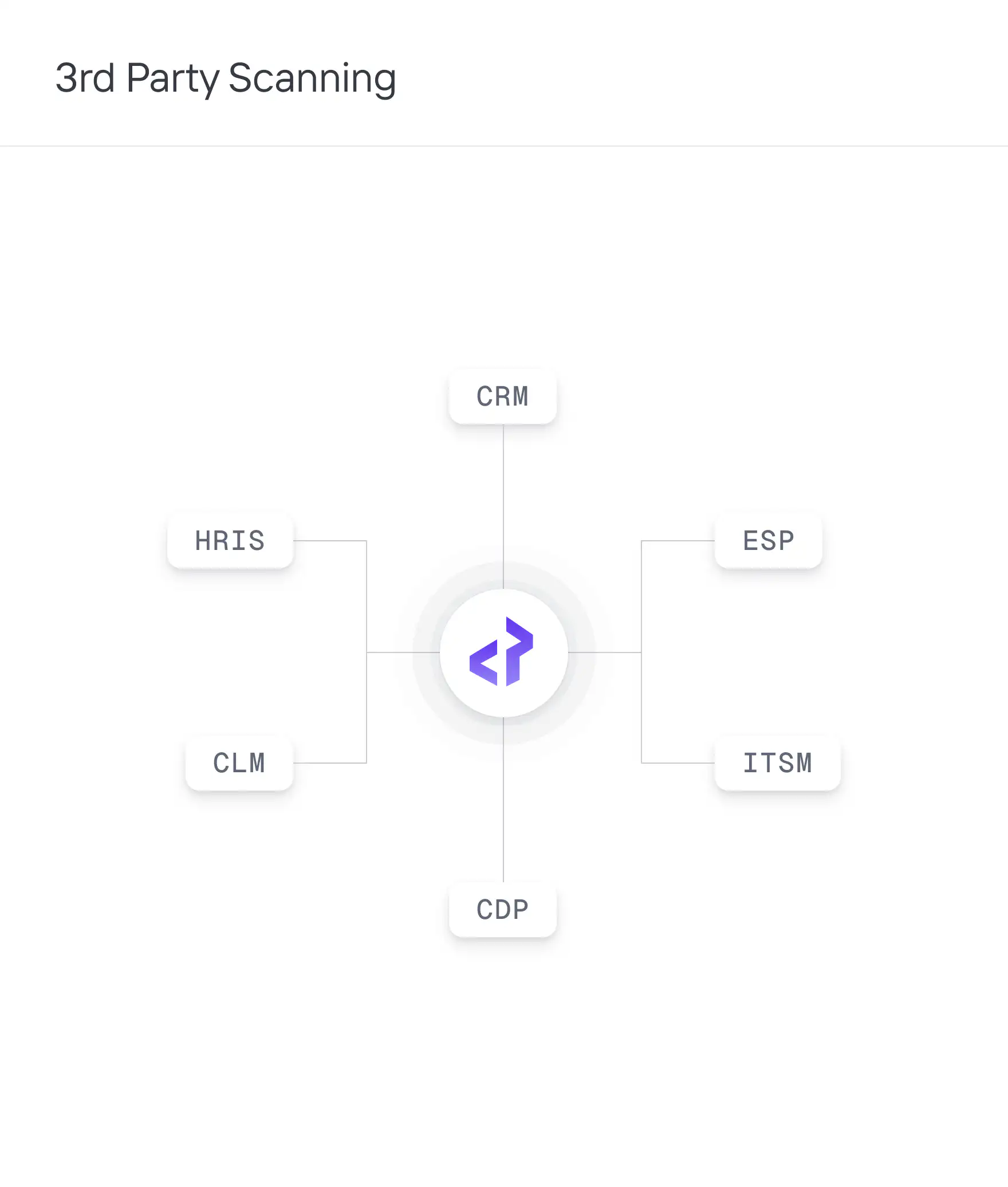
3rd party scanning for SaaS applications
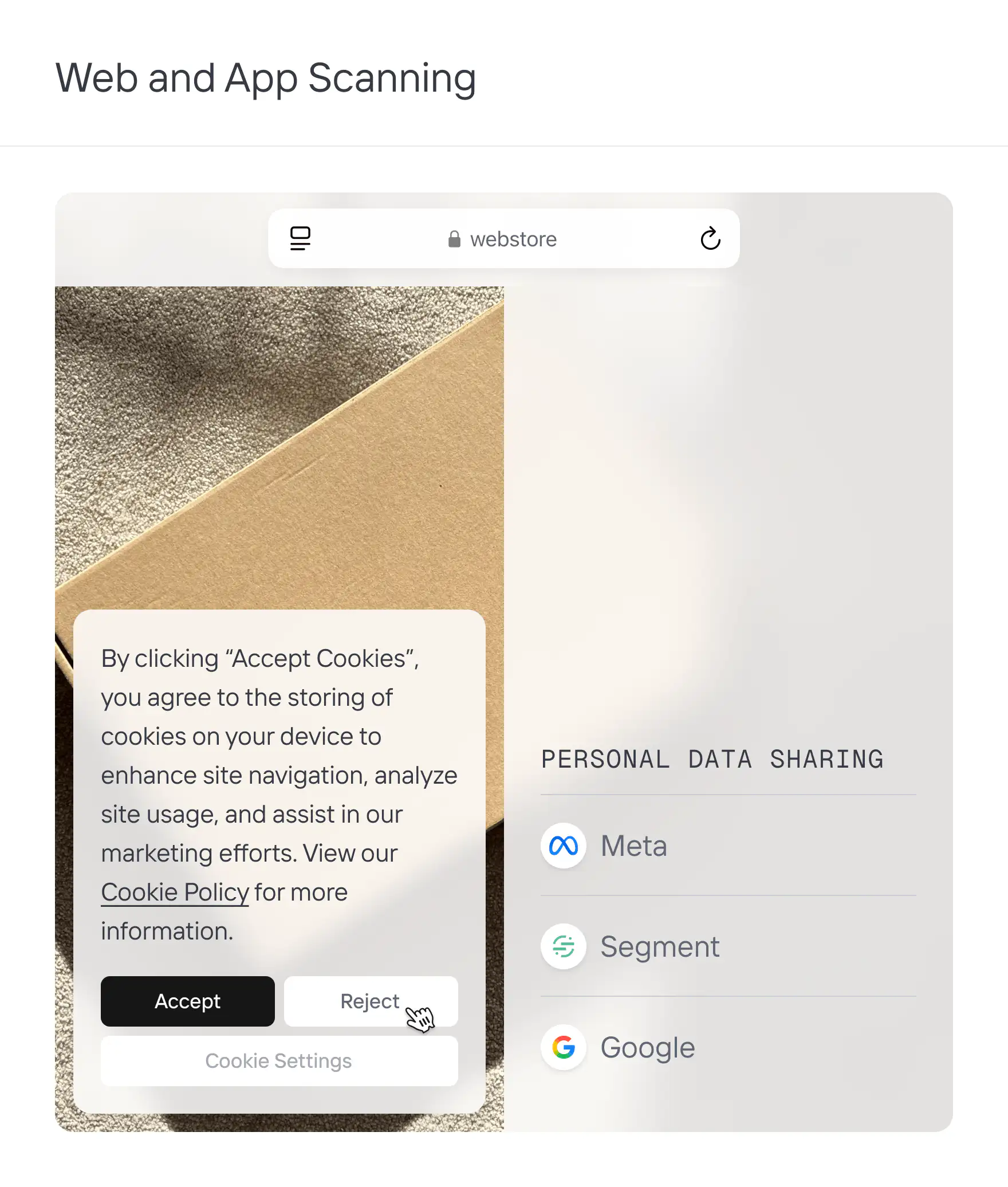
Web and app scanning for user activity
Agents to analyze all documentation

Web Auditor
Continuously scan websites to discover CMP misconfigurations and prevent fines
Detect all 3rd party activity: pixels, scripts, cookies, etc.
Flag all non-compliant data sharing to 3rd parties
Verify CMPs adhere to privacy laws worldwide

App Auditor
Continuously scan mobile apps to discover privacy risks and prevent fines
Detect all 3rd party SDK activity
Flag all non-compliant data sharing to 3rd parties
Verify CMPs adhere to privacy laws worldwide

IMPLEMENTATION
Get started with agentic privacy compliance


Agentic Assessments
Upload any document without any technical implementation or import via integrations with your tools

Dynamic Data Maps
Little to no implementation needed depending on source: code, 3rd party apps, websites, mobile apps, or documentation

Web & Mobile App Auditing
Start auditing your website URLs and mobile app files today. No technical implementation needed

Privacy Tool Integrations
Sync data maps, assessments, and risks to OneTrust, TrustArc, and other privacy tools
Customers
How Privado AI drives customer value

“Privado AI provides visibility of what's really going on with personal data across our tech stack and automates manual controls, such as privacy reviews.”
Aaron Weller –
Privacy Innovation & Assurance Leader


“Privado AI ensures that our privacy compliance reports match our data flows even as our product evolves.”
Aleksandra Kovačevićl –
Director, Head of Product Trust

“Privado AI helped us prevent any accidental sharing or tracking in our product by enabling us to structurally build privacy into our SDLC.”
Puneet Thapliyal –
CISO
Enterprise ready
Enterprise-grade security
Data secure by design
Your data is never stored or used for any AI training. Only outputs are retained.
SOC 2 certified
Privado AI's security policies and controls meet the highest industry standards
Single Sign-On (SSO)
Privado AI offers SSO to allow admins to determine who has access to Privado AI from your SSO solution
Role-based access controls
Access to data within the Privado AI application is governed by role-based access controls (RBAC)


FAQs
For any further questions,
send us a message hello@privado.ai
What is the Privado AI Platform?
Privado AI is an agentic privacy compliance platform. It scans your code, websites, mobile apps, and third-party apps, and AI agents fill in assessments from your documents.
How does the Privado AI Platform work?
Privado AI continuously scans user-facing websites, mobile applications, third-party software, and internal source code to power real-time privacy risk discovery, data maps, and assessments. It also deploys AI agents to analyze documentation, contracts, and policies to automatically populate compliance assessments and flag potential risks without relying on manual questionnaires.
How can an AI privacy platform automate compliance?
An AI privacy platform automates compliance by replacing spreadsheets and stakeholder surveys with AI agents that fill in assessments from your documents and show the reasoning and evidence behind each answer. Agentic AI privacy compliance also flags risks against your own policies and syncs data maps, assessments, and risks to other privacy tools.
How does Privado AI build dynamic data maps?
Privado builds comprehensive, real-time dynamic data maps by continuously scanning first-party software code, live web and mobile apps, and third-party SaaS applications (like CRMs or marketing tools) via API integrations. It implements agentic privacy compliance checks by combining technical runtime scanning with AI agents that extract data elements, data flows, and processing purposes from imported documentation, eliminating the need for manual data mapping.
Can Privado automate PIAs, DPIAs, and RoPAs?
Yes, Privado AI uses Agentic Assessments to populate 100% of Privacy Impact Assessments (PIAs), Data Protection Impact Assessments (DPIAs), and Records of Processing Activities (RoPAs). Its AI agents analyze relevant imported documents (Jira tickets, product requirements, technical specs, and contracts) to extract necessary information and generate corresponding answers backed by cited evidence.
How does Privado AI identify privacy risks across the tech stack?
Privado AI identifies privacy risks by continuously scanning internal codebases, live websites, mobile apps, and third-party systems to detect unauthorized data flows, consent banner misconfigurations, and sensitive data leaks. The agentic privacy platform evaluates data processing against organizational privacy policies and local laws, immediately flagging instances where personal data is shared non-compliantly with third-party tools.