
How to comply with new rules for privacy assessments, automated decisionmaking, & cybersecurity audits
Thank you!
Please check your email to view the guide.
9 best ObservePoint alternatives for consent auditing in 2026
August 31, 2026
5
mins read
Author


A consent banner can look perfect and still fail where it matters. A visitor may click “Reject All,” yet a marketing pixel, analytics script, or mobile SDK may continue sending data after a configuration change, vendor addition, or unreviewed product release.
That is where website validation tools like ObservePoint come in and where many teams start exploring ObservePoint alternatives that go further. They help teams check whether tags and consent settings behave as expected, while recurring audits can catch consent drift before it becomes a wider compliance issue.
But there’s a bigger question: what happens beyond the website? The Federal Trade Commission has warned that tracking pixels can transmit page interactions, purchases, and form data. Privado AI's June 2026 scan of the top 250 websites by traffic across California, France, and the UK found that 90% failed at least one privacy compliance test — most of them running an enterprise CMP at the time.
That’s where the alternatives start to differ. This guide compares nine ObservePoint competitors across consent auditing, analytics QA, CMP management, app monitoring, and product-level evidence, including where Privado AI goes beyond website validation.

What is the difference between a CMP and a consent auditing tool?
A Consent Management Platform (CMP) manages the consent layer. It collects visitor choices, stores consent records, and communicates preferences to connected technologies. A consent auditing tool checks what happens after that choice by testing cookies, trackers, scripts, SDKs, and network requests during real user journeys.
The two can work together. A CMP manages the user’s choice, while consent monitoring helps teams verify whether downstream technologies continue to honor that choice after configuration or product changes.
Why privacy teams might need an ObservePoint alternative?
You may not need an ObservePoint alternative if your only goal is website tag validation. The need changes when privacy risk extends to mobile SDKs, outbound payloads, source code, and remediation workflows. Regulators increasingly look at whether consent choices are honored in practice, not whether a banner exists.
At that point, you are asking: What data left the product, did the user allow it, which rule applies, and who can fix it?
Website audits do not cover every mobile app risk
ObservePoint is strongest for website governance and tag validation. If you run iOS or Android apps, you also need app-level testing for SDKs, permissions, background requests, and consent flows, which is where Privado AI's App Auditor comes in, scanning app files directly without any engineering work.
This visibility matters because regulators increasingly scrutinize whether third-party technologies process sensitive or identifiable data across both channels, a gap Privado AI's CIPA lawsuit prevention playbook explores in more depth.
Tag visibility does not always show data exposure
A fired tag tells you something happened, but not what data moved. Privacy teams need to know whether emails, account IDs, health-related choices, location data, or search terms reached third parties. FTC pixel-tracking actions against GoodRx and BetterHelp show why regulators focus on the data shared, not only the tracker.
Consent validation is not the same as consent collection
ObservePoint can validate consent behavior, but it does not replace a CMP that deploys banners, stores records, manages preferences, and sends consent signals.
Privado AI’s State of Google Consent Mode report examines this gap between consent configuration and actual enforcement.
Privacy findings need a path to remediation
A scan can identify a risky tracker, but engineers still need evidence they can act on. Useful remediation should make clear which technology caused the issue, where it occurred, and what needs to change.
For internally developed software, the Complete Guide to Privacy Code Scanning explains how privacy findings can be more directly connected to technical evidence.
Consent evidence should connect with the privacy program
Consent findings create more value when they update data maps, assessments, RoPAs, and remediation queues. GDPR Article 5 accountability requires controllers to demonstrate compliance, while US opt-out rules require signals to work in practice. A product privacy platform helps connect the issue, evidence, owner, and fix.
A product privacy platform can link the observed issue with accountable owners, supporting evidence, review decisions, and engineering actions. This broader model matters when consent monitoring forms part of an enterprise data governance program.
How did we evaluate the best ObservePoint alternatives?
We evaluated each alternative against the same practical criteria, including website consent testing, mobile app coverage, payload inspection, CMP capabilities, remediation workflows, integrations, implementation requirements, and pricing transparency. We verified product capabilities, package scope, and implementation requirements through official product pages and technical documentation, using review platforms only to support user-experience observations.
We also rechecked pricing and package details against vendor information available in August 2026. Based on these criteria, we classified each platform as an independent auditor, analytics-monitoring product, or CMP-plus-audit platform.
9 Best ObservePoint Competitors for Consent Management in 2026
Here is a quick comparison of five leading ObservePoint alternatives to help you decide:
Now, let’s have a look at the top nine ObservePoint competitors, including their capabilities, limitations, pricing, and ideal use cases.
1. Privado AI
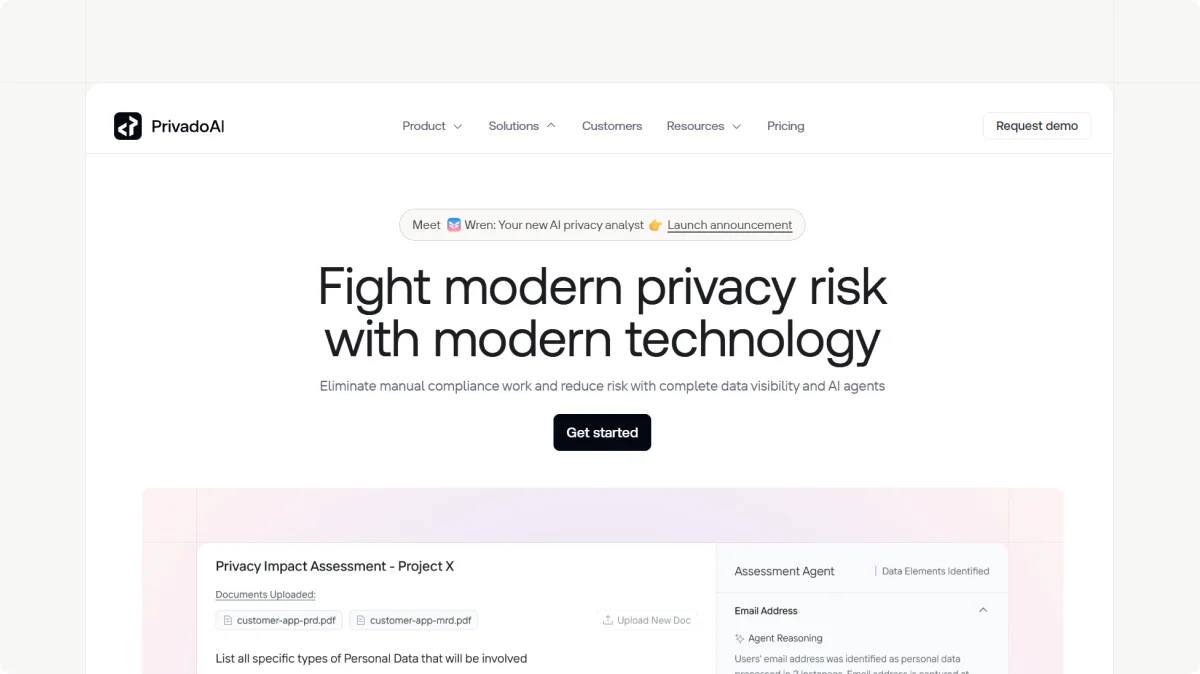
Privado AI is an agentic privacy platform for teams that need evidence of how products process personal data. It verifies consent enforcement across websites and applications, identifies sensitive data sharing, and connects findings with product privacy workflows.
ObservePoint focuses primarily on digital analytics and website governance. Privado AI expands coverage through live website auditing, app testing, Dynamic Data Maps, assessment automation, and source-code analysis for internally developed software.
Key Features
- Web Auditor tests banners, cookies, pixels, scripts, data flows, and jurisdiction-specific consent requirements without technical implementation.
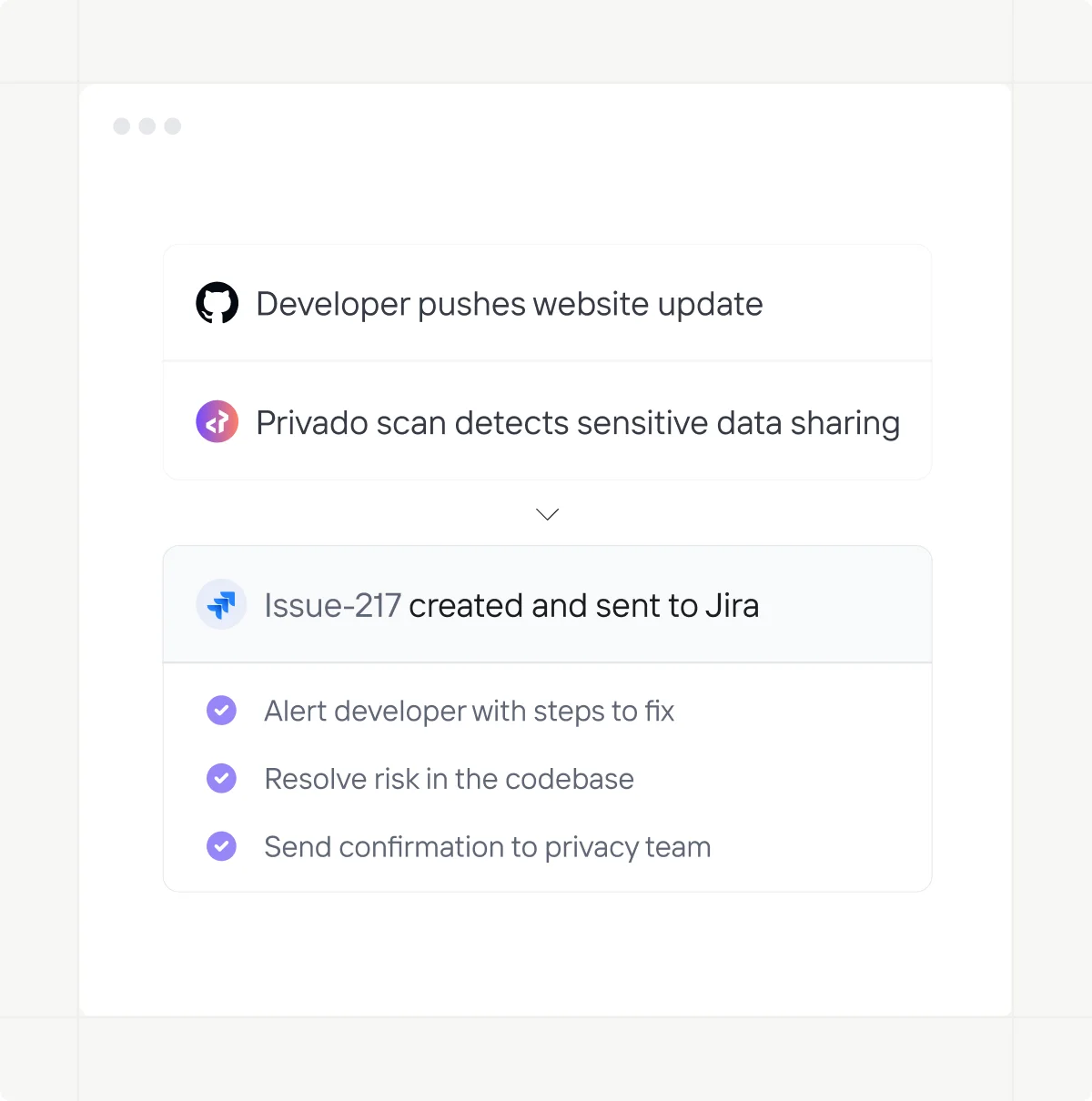
- App Auditor analyzes iOS and Android app files for SDK behavior, permissions, consent enforcement, and network requests.
- Dynamic Data Maps connect evidence from websites, apps, source code, SaaS tools, documents, contracts, and assessments.
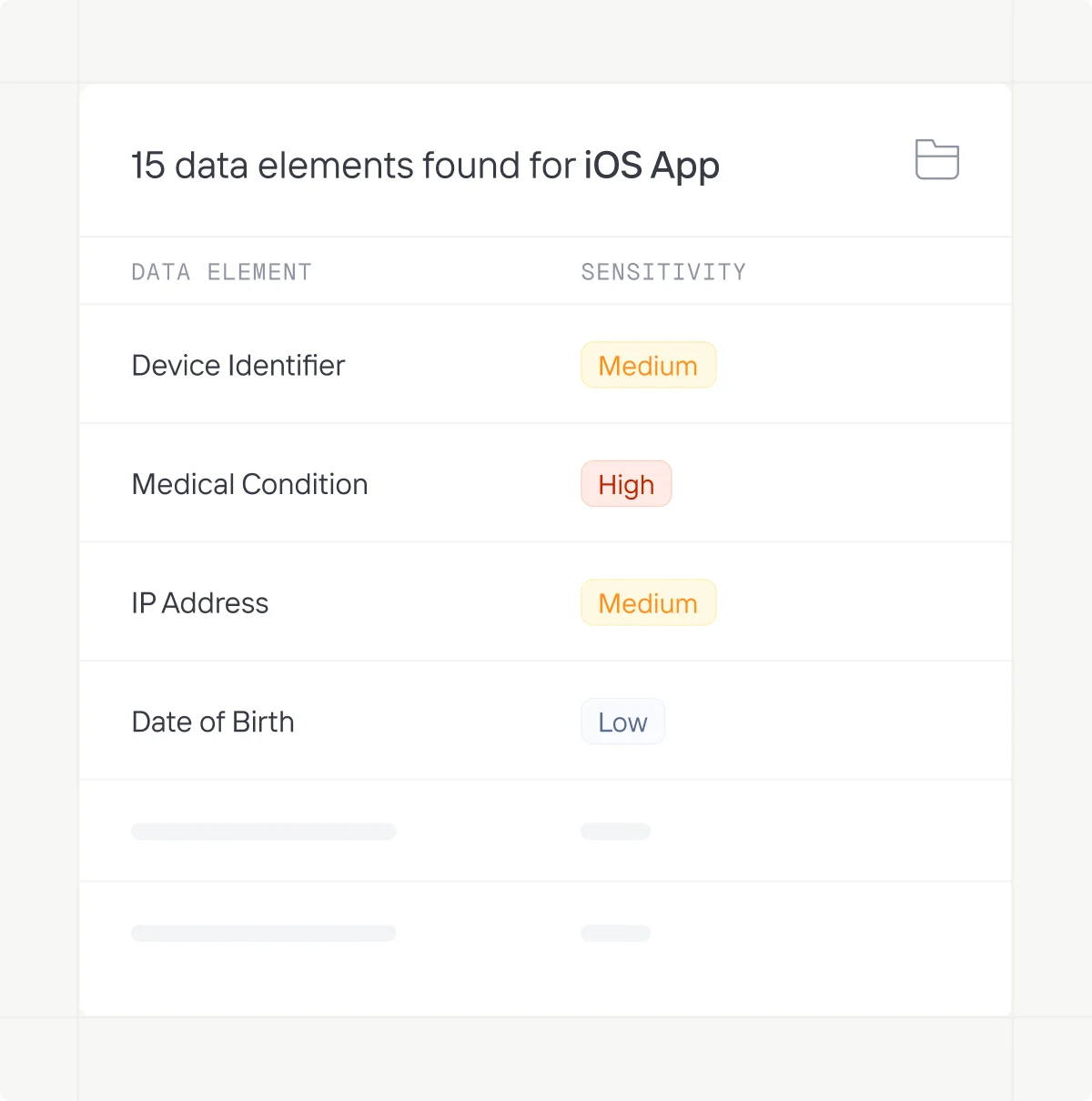
- Wren supports assessment intake, evidence collection, form population, risk identification, follow-up questions, approval routing, and remediation tracking.
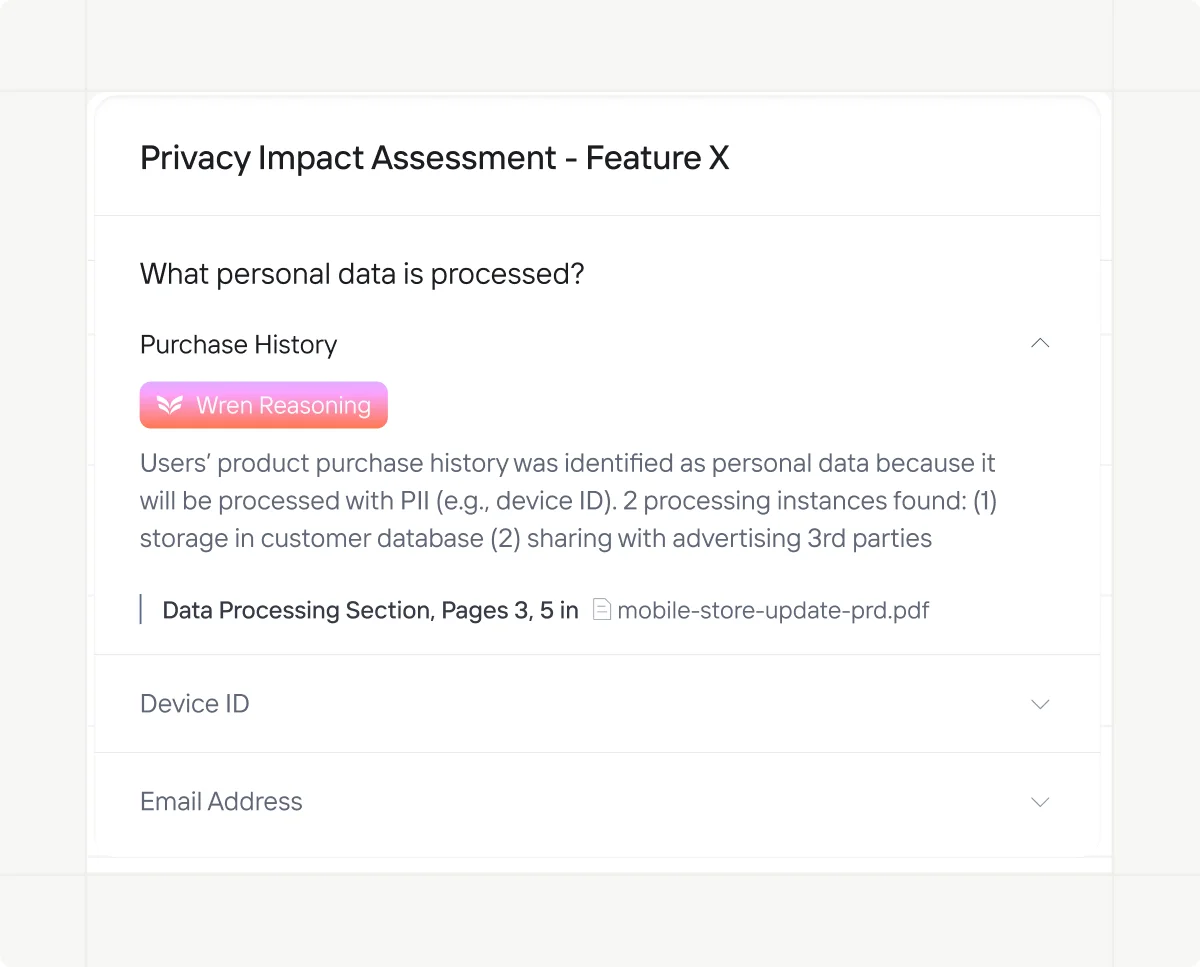
- Privacy code scanning links personal data processing with repository evidence after integration with the applicable source-code environment.
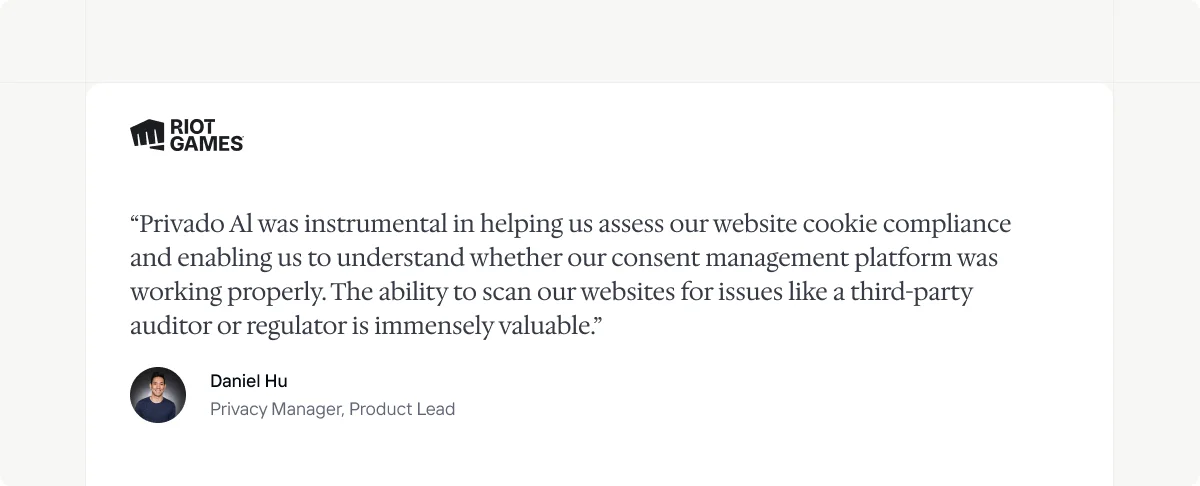
Daniel Hu, Privacy Manager at Riot Games, credited Privado AI with helping the team assess website cookie compliance and confirm their consent management platform was actually working as intended. He specifically valued the ability to scan websites the way a third-party auditor or regulator would, catching gaps before they became compliance issues.
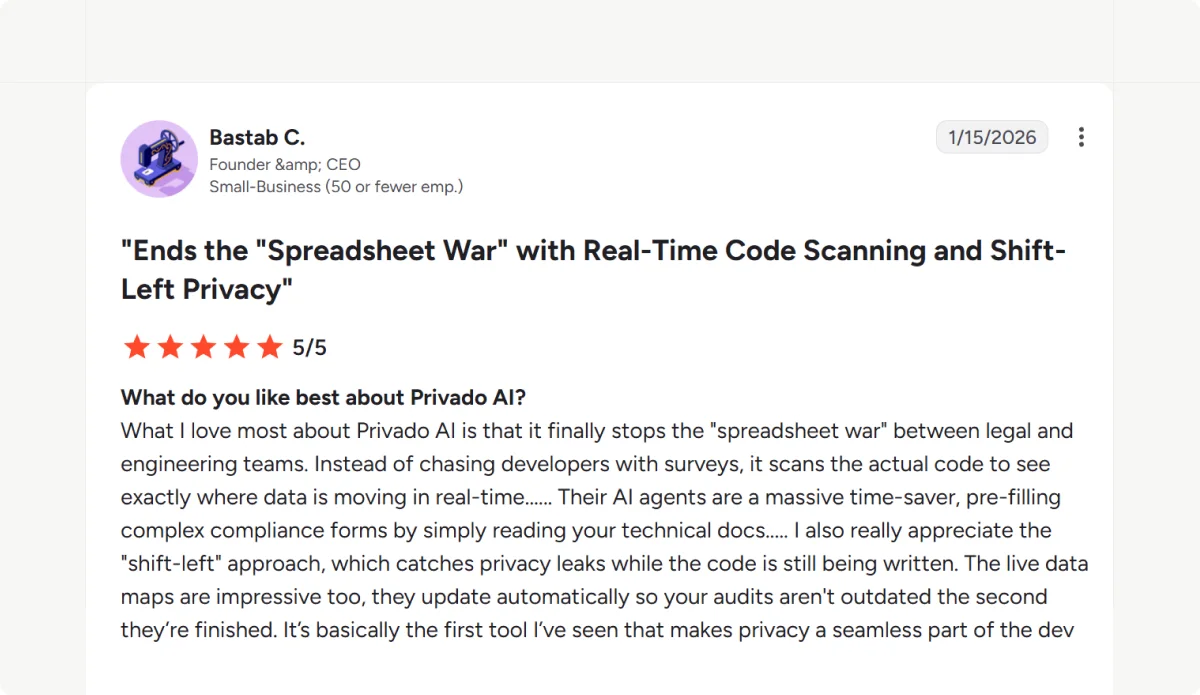
Another 5/5 G2 review highlighted how real-time code scanning replaces spreadsheet-based coordination between legal and engineering. The reviewer also valued AI-assisted form completion and shift-left risk detection. Automatically updated data maps were praised for keeping audits aligned with development activity.
Pricing
Here are the Privado AI starting prices: Web Auditor starts at $600 per website/month, App Auditor at $800 per app/month, and Wren at $4,200/month for up to 500 assessments, all billed annually. The Privacy Management Platform uses custom pricing based on business requirements, while Web Auditor and App Auditor can be deployed with no technical implementation, making them useful for quick checks of websites and mobile apps.
| Also Read: Privado AI vs ObservePoint
2. Boltive
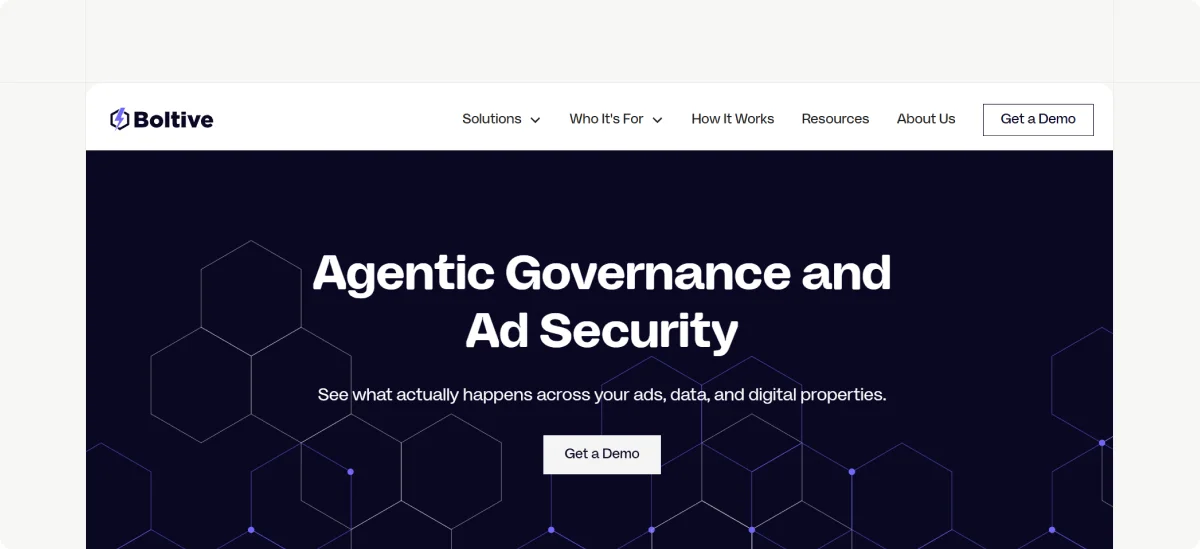
Boltive provides privacy compliance verification and ad security monitoring through simulated user experiences. The platform observes how consent, targeting, third-party technologies, and advertising behavior operate within live digital environments.
Boltive may suit digital marketing and privacy teams that manage programmatic advertising exposure alongside web privacy requirements. Its ad security orientation distinguishes Boltive from ObservePoint’s broader analytics governance and Privado AI’s product privacy model.
Key Features
- Simulated user personas test consent and advertising behavior across locations, devices, and browsing conditions.
- Continuous monitoring identifies changes in consent enforcement, vendor activity, targeting, and data sharing.
- Browser-level visibility shows how tags, pixels, cookies, vendors, and advertising technologies execute.
- Ad security controls detect unsafe advertisements, malicious behavior, quality failures, and policy violations.
Pros
- Boltive combines privacy verification with specialized advertising security monitoring.
- Simulated users help teams evaluate behavior across regions and audience conditions.
- Continuous execution monitoring can reveal issues that periodic manual reviews miss.
Cons
- Boltive does not publish standard product pricing for preliminary budget comparison.
- Broader assessment and data-mapping coverage requires confirmation during procurement.
Pricing
Boltive does not publish fixed prices on its reviewed product pages. Buyers must request a demo and confirm pricing based on digital-property coverage, monitoring frequency, geographic scope, selected privacy modules, and ad security requirements.
3. Vault JS
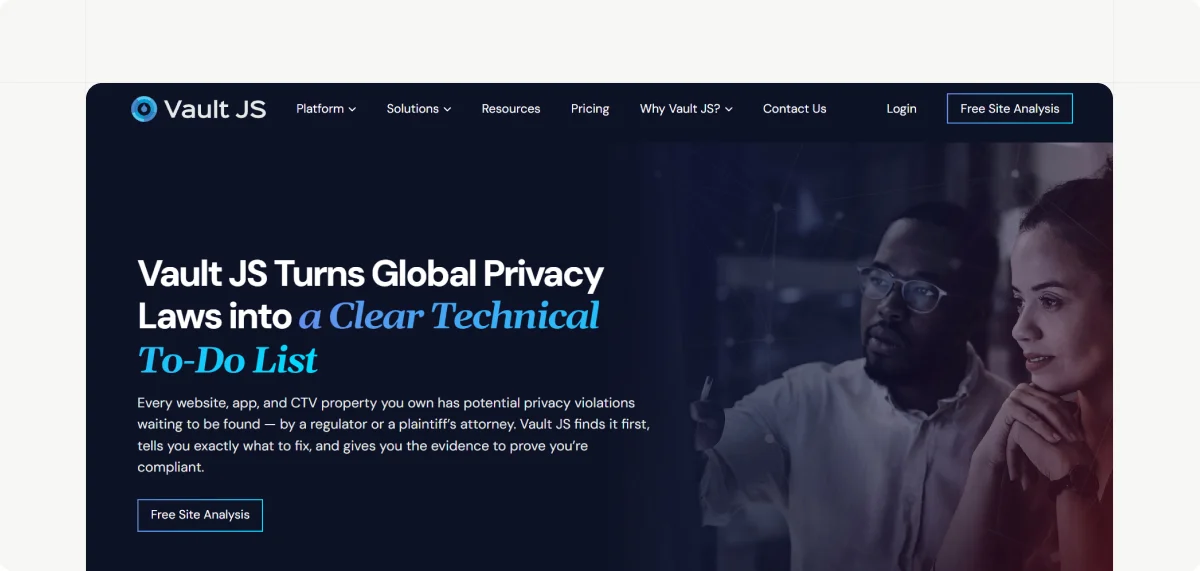
Vault JS provides independent privacy compliance monitoring for websites, mobile apps, and connected television properties. It translates selected privacy frameworks into technical checks and produces prioritized remediation evidence from observed digital behavior.
Vault JS suits enterprises seeking framework-led monitoring across several regions or digital channels. Unlike a CMP, Vault JS verifies existing implementations and identifies technical gaps rather than deploying consent experiences.
Key Features
- Consent-state testing evaluates live behavior across selected jurisdictions and privacy frameworks.
- Automated detection identifies cookies, scripts, trackers, SDKs, and unauthorized third-party sharing.
- Enterprise add-ons extend monitoring into native mobile apps, CTV properties, and security controls.
- Gap analysis converts observed violations into prioritized technical remediation guidance.
Pros
- Vault JS provides independent monitoring across websites and enterprise digital properties.
- Published entry pricing gives buyers visibility before engaging the sales team.
Cons
- Native mobile and CTV monitoring require Enterprise Global add-ons.
- Expanding frameworks, properties, regions, and controls increases the commercial scope.
- Vault JS does not deploy or operate a CMP consent layer.
Pricing
Per Vault JS's pricing page as of August 2026, Essentials starts at $1,250 monthly with annual billing for one framework, one property, and two regions. Essentials Plus starts at $3,333 monthly for five frameworks, 10 properties, and six regions. Enterprise Global uses custom pricing and offers mobile, CTV, and security add-ons.
4. DataTrue
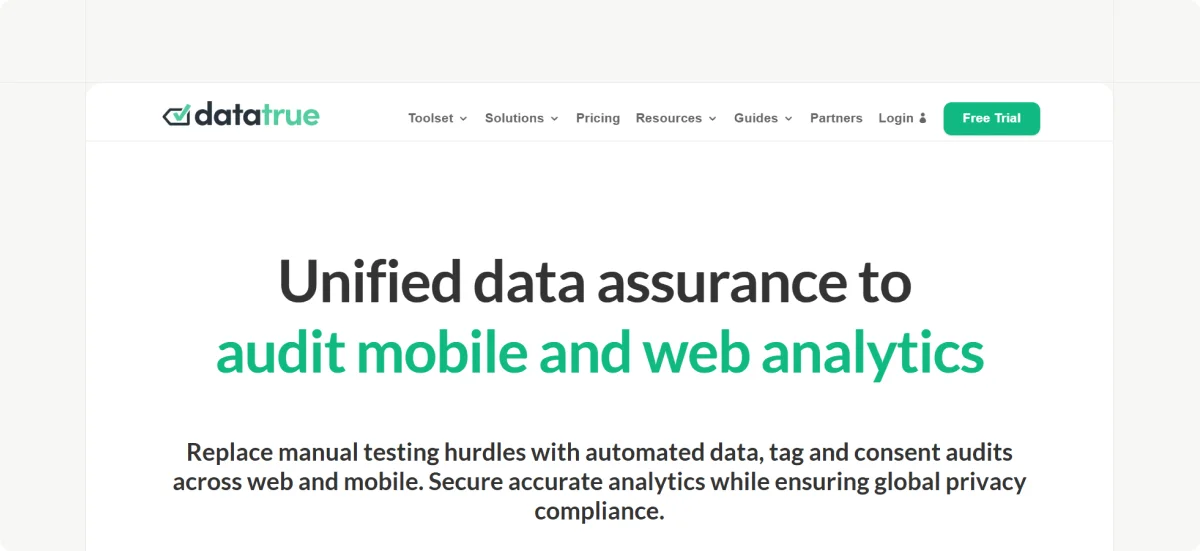
DataTrue combines digital analytics quality assurance with consent and privacy monitoring. It helps analytics teams test tags, user journeys, consent signals, emails, and implementation accuracy across digital measurement environments.
DataTrue represents a close ObservePoint alternative for analytics-led buyers. Both platforms emphasize validation and data integrity, while DataTrue also documents native mobile testing and sensitive data leak alerts within its Enterprise package.
Key Features
- Automated QA validates analytics and advertising tags against approved consent signals.
- Testing covers websites, mobile apps, marketing emails, and browser-based user journeys.
- Sensitive data alerts identify unauthorized collection or transmission to third parties.
- Monitoring supports Google Analytics, Adobe implementations, Google Tag Manager, and other analytics technologies.
Pros
- DataTrue combines analytics QA with consent validation and privacy monitoring.
- Public pricing supports earlier procurement planning and vendor comparison.
- DataTrue offers a free 30-day trial alongside product demonstrations.
Cons
- DataTrue focuses more heavily on analytics assurance than wider privacy management.
- Broader data maps and assessment workflows may require another platform.
Pricing
Per DataTrue's pricing page as of August 2026, Starter costs $16,000 annually for two domains, two users, and 10,000 monthly page scans. Team plan costs $32,000 annually for six domains, five users, and 50,000 monthly scans. Enterprise pricing is custom and includes mobile testing, leak alerts, unlimited domains, and higher scan volumes.
5. Tag Inspector
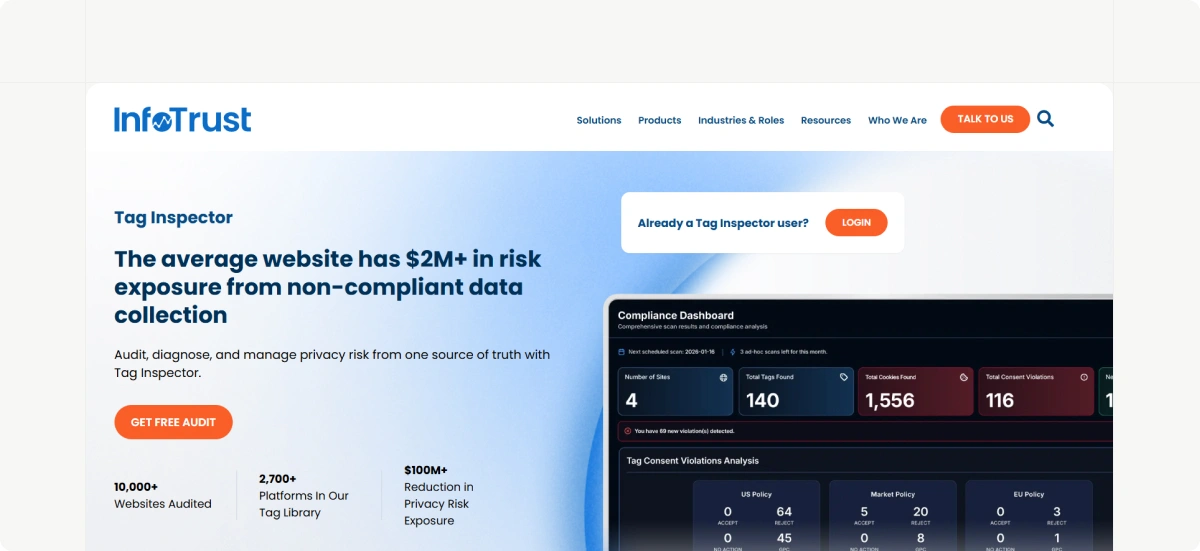
InfoTrust’s Tag Inspector focuses on website privacy auditing, tag governance, consent policy validation, and remediation management. It creates inventories of cookies, vendors, network requests, and technologies operating across audited pages.
Tag Inspector suits organizations managing complex tag management environments involving Google Tag Manager, Tealium iQ, custom CMP configurations, or authenticated user journeys. Its 2026 updates expanded journey recording and CMP compatibility.
Key Features
- Monthly and ad hoc audits simulate major consent conditions across website pages.
- Tag, cookie, vendor, and request inventories support policy classification and detection.
- Consent policy management identifies violations and assigns remediation actions.
- No-code recording supports authenticated experiences and multi-step user journeys.
Pros
- Tag Inspector provides detailed website tag inventories and consent-policy validation.
- Journey recording supports checkout, account, and authenticated website flows.
Cons
- Tag Inspector primarily addresses website environments rather than native app files.
- Real-time PII monitoring and API access require additional licensing.
- Public package descriptions do not include confirmed subscription prices.
Pricing
Tag Inspector does not publish any pricing details on the official website. As per G2, a free privacy audit is available for users; to get a quote, users should contact the platform directly.
6. Trackingplan
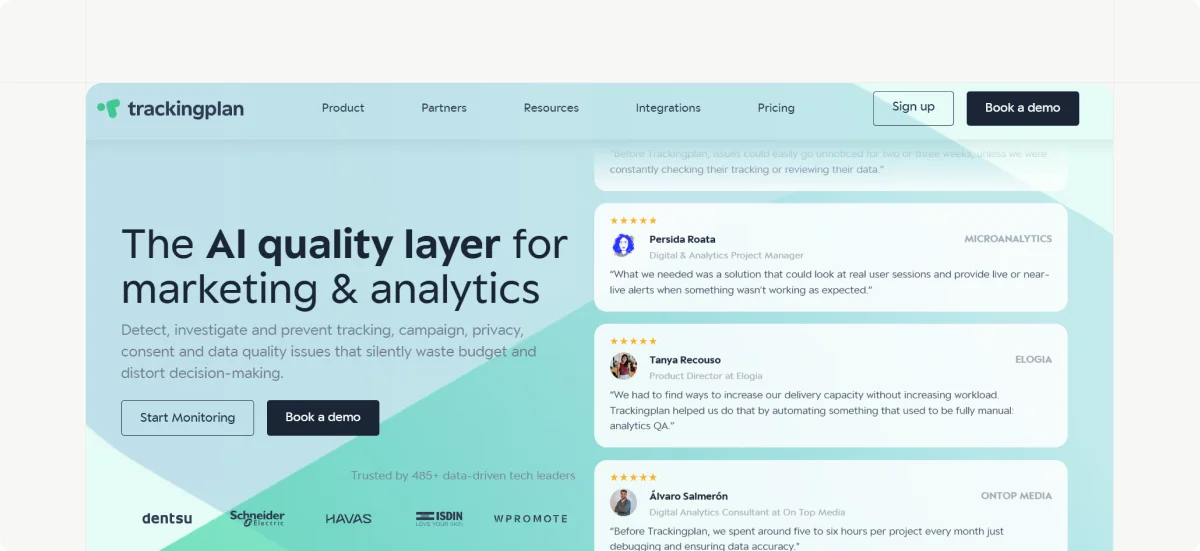
Trackingplan monitors real-user traffic across websites, apps, and backend analytics environments. It combines analytics observability with consent warnings, cookie visibility, datalayer checks, PII detection, and automated root-cause analysis.
Trackingplan suits marketers and analytics teams that need ongoing production monitoring rather than synthetic scanning alone. The platform watches events across web, iOS, Android, and server environments after teams install its JavaScript snippet or application SDK.
Key Features
- Real-user monitoring detects data collection changes across production analytics traffic.
- Consent validation identifies tags, events, SDKs, and pixels firing without permission.
- Alerts identify changes affecting attribution, campaign reporting, data integrity, and privacy.
- AI-assisted debugging helps teams locate configuration errors and understand downstream impact.
Pros
- Trackingplan continuously monitors real-user analytics rather than relying only on scheduled scans.
- The platform covers web, app, backend, consent, and marketing-pixel activity.
- Public pricing includes a free option and a 14-day trial.
Cons
- Deployment requires a JavaScript snippet or SDK inside the monitored environment.
- Wider privacy assessment and data-map coverage should be confirmed before purchase.
Pricing
Per Trackingplan’s pricing page as of August 2026, Trackingplan offers a free tier for up to 10,000 monthly visitors. Annual pay-as-you-grow pricing starts at $249 monthly and scales according to monthly active users. Enterprise pricing starts at $1,750 monthly, billed annually, with API access and premium support.
7. Ketch
Ketch combines consent management with Data Sentry, which examines frontend data flows and validates downstream preference enforcement. This model suits organizations seeking consent deployment alongside independent monitoring of connected technologies.
Ketch differs from pure auditing products because its CMP can create experiences, store records, and communicate choices. Data Sentry adds observed visibility into vendors, sensitive data transfers, and post-opt-out behavior.
Key Features
- The CMP manages privacy experiences, tracker blocking, consent records, and policy templates.
- Data Sentry examines frontend data flows and verifies downstream preference enforcement.
- The platform flags unauthorized sensitive data transfers across connected advertising technologies.
- Ketch supports Global Privacy Control, IAB TCF, IAB GPP, and regional experiences.
Pros
- Ketch can deploy a CMP while validating frontend consent behavior.
- Public plans support small businesses and higher-traffic digital properties.
- Ketch offers standalone products for teams retaining another consent platform.
Cons
- Data Sentry availability and pricing require confirmation for the selected package.
- Adding broader modules can expand implementation and commercial scope.
Pricing
Per Ketch's pricing page as of August 2026, Ketch provides a free plan for 5,000 monthly unique users. Starter costs $150 monthly for 30,000 users. Plus starts at $499 monthly with annual billing for 100,000 users. Pro uses custom pricing and includes wider privacy management capabilities.
8. Lokker
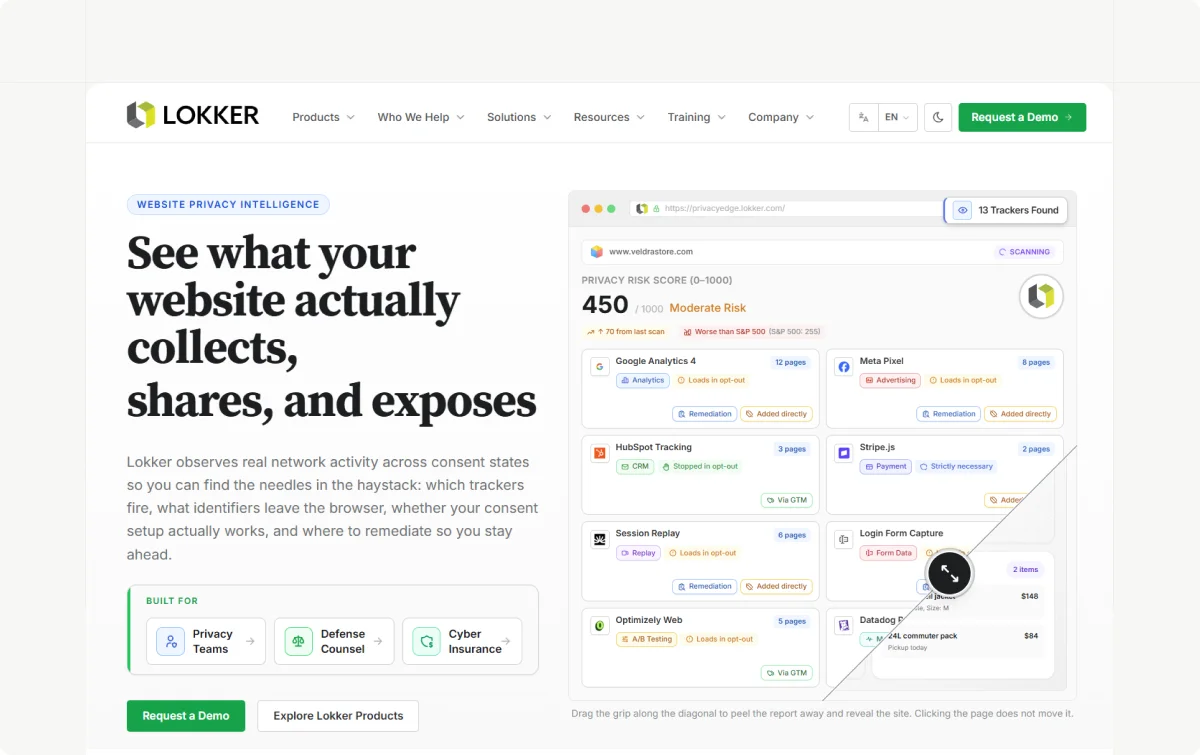
Lokker’s Consent Validator tests existing consent configurations across no-interaction, accept, reject, and Global Privacy Control states. It captures network-layer behavior through automated browser sessions and ranks findings by remediation priority.
Lokker operates as an independent validator rather than a CMP. The platform suits legal, privacy, and website teams that need evidence showing which cookies, scripts, and requests operate after each visitor choice.
Key Features
- Headless browser sessions test four consent states across representative website pages.
- Network capture compares cookies, scripts, and outbound requests after each visitor action.
- GPC validation checks whether websites honor browser-based opt-out signals.
- Detection identifies uncategorized scripts, category mismatches, and tag manager governance drift.
Pros
- Lokker provides focused consent validation across four important visitor states.
- The platform works with several established and custom CMP implementations.
Cons
- Lokker does not publish standard Consent Validator prices.
- Consent Validator primarily focuses on websites and browser-level behavior.
- Application-file and source-code coverage should be confirmed separately.
Pricing
Lokker does not publish fixed Consent Validator pricing. Organizations must request a demo and confirm costs based on domain volume, portfolio size, scan frequency, reporting requirements, jurisdiction coverage, and related Privacy Edge products.
9. Sourcepoint
Sourcepoint, now part of Didomi, combines consent management, preference management, and Diagnose compliance monitoring. Its products support publishers and enterprises managing consent experiences across websites, apps, and connected television environments.
Diagnose scans vendor behavior and provides compliance metrics covering trackers, pixels, fingerprinting indicators, piggybacking tags, and cross-border activity. This CMP-plus-monitoring model differs from ObservePoint’s analytics validation focus.
Key Features
- Dialogue CMP manages consent experiences across websites, applications, browsers, and devices.
- Automated discovery identifies scripts, trackers, vendors, and data collection technologies.
- Diagnose scans websites and apps for vendor behavior and consent failures.
- Vendor Trace compares technology activation before action, after rejection, and following opt-out.
Pros
- Sourcepoint combines enterprise consent deployment with vendor compliance monitoring.
- Diagnose provides granular visibility into third-party behavior and consent status.
- Public entry pricing supports preliminary comparison before a sales consultation.
Cons
- Buyers should separate Dialogue CMP features from Diagnose monitoring coverage.
- Mobile Diagnose requires an SDK and sufficient production activity.
Pricing
Per Sourcepoint's published pricing as of August 2026, Sourcepoint Essentials starts at $500 monthly. Pro starts at $1,250 monthly and includes Compliance Monitoring for one scanned property and region. Enterprise uses custom pricing and adds preference management and data subject request workflows.
What features should an ObservePoint alternative provide?
The right ObservePoint alternative depends on whether your team needs independent auditing, analytics QA, CMP deployment, or product-level evidence. Evaluate platforms against the risks, implementation model, and remediation workflow your organization must support.
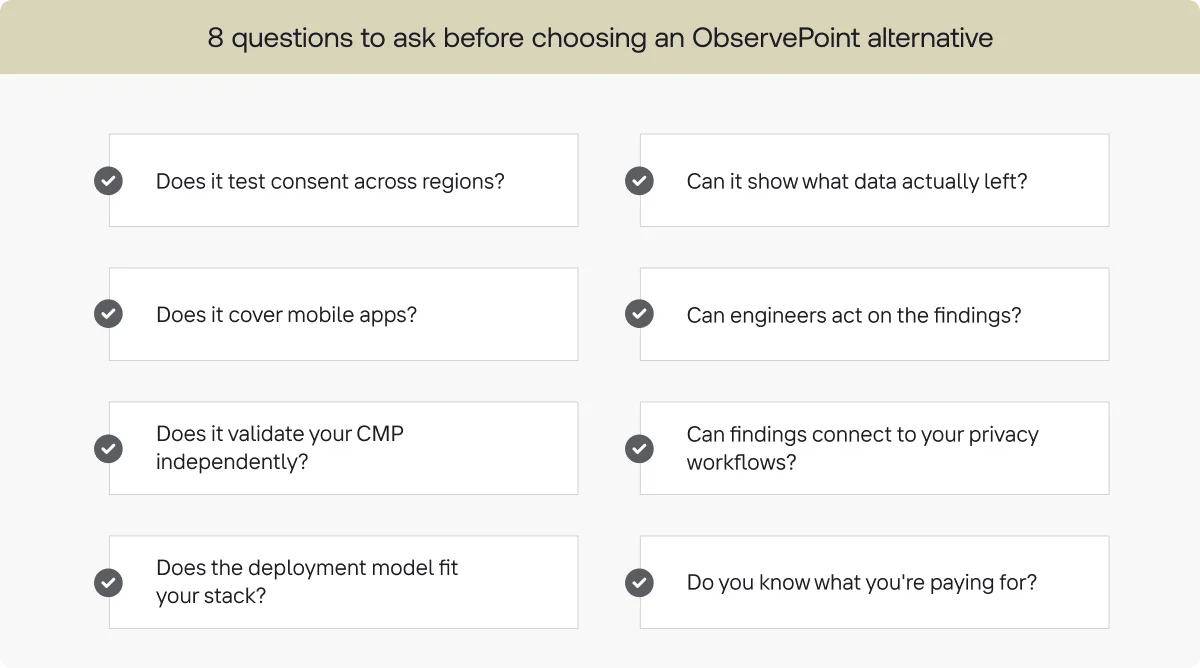
- Multi-jurisdiction consent testing: Test accept, reject, no-interaction, opt-out, and GPC journeys under the requirements applying to each visitor location.
- Payload and data-element visibility: Identify which personal data elements leave the product, which vendors receive them, and which consent state applies.
- Native mobile app auditing: Inspect SDKs, permissions, network calls, consent behavior, and background transfers across iOS and Android applications.
- Actionable remediation evidence: Give engineering teams the responsible technology, affected journey, observed request, accountable owner, and correction guidance.
- Appropriate deployment model: Compare URL scans, app-file analysis, real-user monitoring, browser testing, proxies, and repository integrations before procurement.
- Connected privacy workflows: Determine whether findings can update data maps, assessments, RoPAs, risk registers, developer tickets, and governance reports.
- Transparent commercial scope: Confirm pricing units, minimum commitments, usage limits, implementation services, renewal terms, and separately licensed modules.
- Independent CMP validation: Verify that recorded choices control downstream technologies instead of relying solely on the CMP configuration dashboard.
The Complete Guide to Product Privacy Management provides additional context on connecting continuous product evidence with privacy workflows beyond individual scans.
Which ObservePoint alternative should you choose?
ObservePoint remains suitable for organizations prioritizing website governance, analytics validation, accessibility checks, and page-based recurring audits. Its value depends on testing frequency, page volume, geographic coverage, and the chosen mobile validation workflow.
Boltive, Tag Inspector, and Lokker suit teams prioritizing website privacy verification. DataTrue and Trackingplan fit analytics groups that need consent monitoring alongside data integrity, attribution accuracy, and production QA.
Ketch and Sourcepoint are stronger candidates when an organization wants CMP deployment, preference management, and compliance monitoring within one commercial relationship. Vault JS suits organizations requiring independent framework-led monitoring across several digital channels.
Privado AI fits teams needing consent verification across websites and native apps, personal data classification, Dynamic Data Maps, assessment automation, and code evidence. Web Auditor and App Auditor can begin without technical implementation, while source-code scanning requires repository integration.
Privacy leaders evaluating whether their CMP requires stronger oversight can also watch Privado AI’s continual privacy risk monitoring webinar. It explains why capturing consent does not prove that every downstream technology respects the resulting choice.
Request a free Privado AI audit to verify whether your CMP, cookies, pixels, scripts, and SDKs honor visitor choices across live products.
Legal disclaimer: This article is for informational purposes only and does not constitute legal advice. Product features, prices, and regulatory requirements can change. Confirm current commercial terms with each vendor and consult qualified counsel for guidance specific to your organization.
FAQs
Who are ObservePoint’s main competitors?
ObservePoint’s main competitors include Privado AI, DataTrue, Tag Inspector, Trackingplan, Vault JS, Boltive, Lokker, Ketch, and Sourcepoint. DataTrue and Trackingplan emphasize digital analytics and QA, while Ketch and Sourcepoint combine consent management with monitoring. Privado AI focuses on product-level privacy compliance across websites and mobile apps, with evidence for remediation and governance.
Is ObservePoint a reliable consent validation service?
Yes. ObservePoint is a reliable consent validation service for website-focused teams that need recurring audits, tag management checks, browser journeys, and alerts for misconfigured tracking. It scans cookies, scripts, tags, and network requests across consent profiles. Reliability still depends on correct configuration, sufficient page-scan coverage, and regular review after website changes.
What is the cheapest alternative to ObservePoint?
Two alternatives have a free tier: Ketch (up to 5,000 monthly unique users) and Trackingplan (up to 10,000 monthly visitors). Neither is a like-for-like ObservePoint replacement — Ketch is a CMP with tracker scanning, Trackingplan is analytics observability. Among paid options with independent validation, Trackingplan starts lowest at $249 a month, billed annually.
Is ObservePoint worth the cost?
ObservePoint can be worth the cost for enterprises that need recurring website audits, analytics validation, accessibility checks, and governance across Google, Adobe, Tealium iQ, or other tag ecosystems. Per ObservePoint's published pricing as of August 2026, the first 1,000 page scans and 100 journey runs are free yearly, then scans start at $0.17 per page and journeys start at $2,500 for 1,500 runs, scaling with volume. Value ultimately depends on scan volume, release frequency, geography, and whether mobile app or code-level evidence is required.
Which ObservePoint competitor is best for enterprise businesses?
For enterprise buyers, the deciding factor is usually whether mobile apps and source code are in scope. Privado AI covers website audits, app-file testing, personal data classification, Dynamic Data Maps, and code evidence in one platform. . Sourcepoint or Ketch fit CMP-led programs, while DataTrue suits analytics QA. Enterprise buyers should compare implementation, integrations, data governance, pricing, and remediation requirements.
Industry insights you won’t delete. Delivered to your inbox.
Get regular updates from Privado AI
Request free website audit
Request Privado AI demo
Share
Author
.webp)